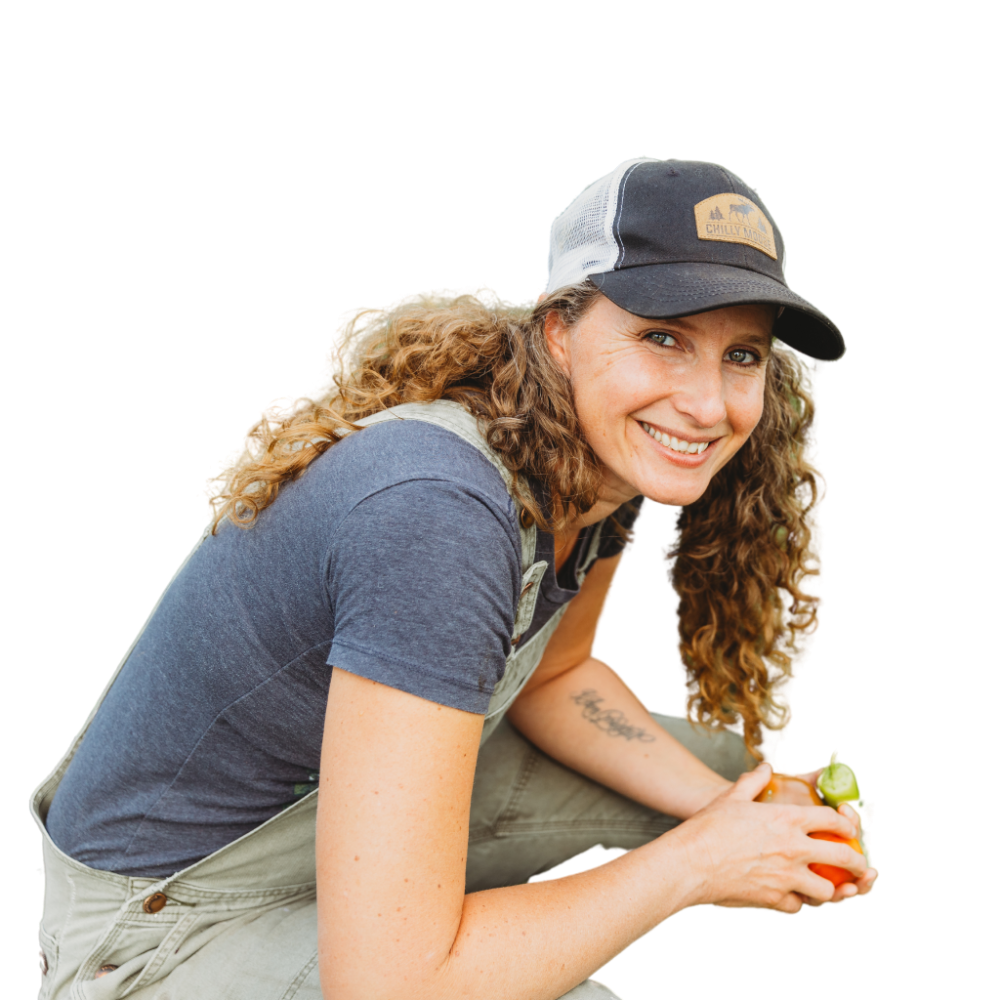
Chelsea in the high tunnel in front of growing seedlings.

What to Keep When You Downsize Your Homestead

Table of Contents

Ten years ago, we arrived at Little Mountain Ranch with big plans and wide-open land.
 
Now we are packing it all up.
 
When we made the decision to sell the ranch and move to a smaller property of around 8 acres, the question that followed immediately was: what do we actually keep?
 
This is not a simple question after a decade of accumulation. Large equipment, dairy cows, a flock of chickens, an orchard permaculture space, a high tunnel I have poured years of work into, a wood cook stove named Martha. Every single thing has history attached to it.
 

Over the last few months, Dan and I have been walking the property, selling what we can, rehoming what we should, and making deliberate choices about what earns a place in the next chapter. Here is how we worked through it, category by category.

You can follow along with our complete walkthrough of the sorting and selling process on the property right here.

Start With This Principle: Build the Container Before You Fill It

The most important lesson this ranch has taught us is simple to say and hard to practise: build the infrastructure first, then bring the animals.
 
We learned this the hard way in our early years here. Animals arrived before we had proper pens, the right knowledge, or the time they required. Every time we skipped building the container, we paid for it somewhere down the line.
 
As we move to a new property, we are committed to honouring that lesson. Before any livestock comes with us, the fencing, housing, and daily systems need to be in place and working. That means some animals we genuinely love are staying behind or waiting with trusted friends until we are properly set up.
 
Tip: Before deciding what animals to bring to a new property, ask yourself honestly whether the infrastructure is ready to receive them. If the answer is no, that is your answer.

The Animals: Who Made the Cut

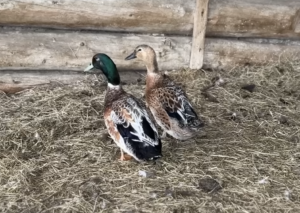
The ducks are coming. We have had this pair of Welsh Harlequins for seven years. They bring consistent, genuine joy. They will be penned until we are set up at the new property.
Chelsea's Welsh Harlequin duck breeding pair.
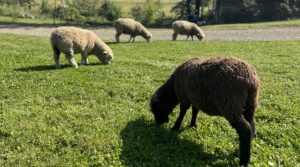
The sheep are coming. Hazel is the most affectionate sheep I have ever encountered. She comes up for scratches like a puppy and makes me smile every single day. Her sisters are coming too, partly because Hazel would be lonely, and partly because sheep are actually well suited to orchard management. Unlike goats, they will not jump up and strip branches off trees. We can rotate them through the orchard using hot-wire pens to keep the grass down.
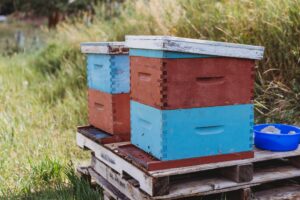
The bees are coming. I used to be genuinely terrified of bees. A decade of keeping them has turned that entirely around. I cannot imagine my life without them now.
2 of Chelsea's bee hives.
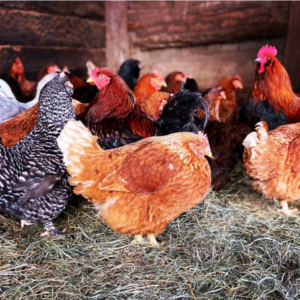
The chickens are likely staying, at least for now. A close friend has offered them a good home, and if we want eggs or breeding stock from our established line later, that door stays open. We have been quietly developing a unique line of black chickens here for eight years. It was not an easy call.
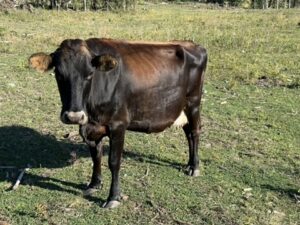
The cows are undecided. If our accepted offer on the new property goes through, there is a farm yard suitable for two cows. If that sale falls through for any reason, Thistle and Link will stay with friends while we find the right place. Having a family milk cow is still something we want in our life. We are just not ready to commit until we know exactly where we are landing.
A brown swiss/jersey short horn dairy cow named Thistle.

The Garden: What Comes and What Stays
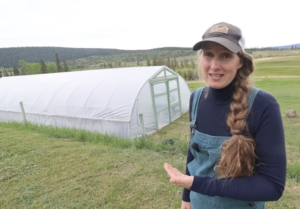
The high tunnel is staying. The buyers are avid gardeners and she was genuinely excited about it. I have chosen to feel happy about that, and to redirect my energy toward the two high tunnels we plan to put up on the new property as soon as we arrive.
Established fruit trees, berry bushes, and shrubs are staying. It makes more practical sense to buy started plants than to transplant mature root systems midsummer.
 
But I am taking the sentimental plants:
  • Comfrey root cuttings. I propagated all the comfrey under my fruit trees from just two small pieces of root. Taking cuttings to plant under the trees in the new orchard.
  • Rhubarb root stock. Original to this property from when it was first homesteaded. A piece of that history is coming with us.
  • Columbine. The original clump was growing here when this property was homesteaded in the 1930s. A few roots are coming.
  • Horseradish root cutting. Already in a pot and doing well.
  • Chives. Transferred to a pot in early spring.
 
Tip: For sentimental or hard-to-replace plants, start potting up root cuttings in early spring so they have time to establish before the move.

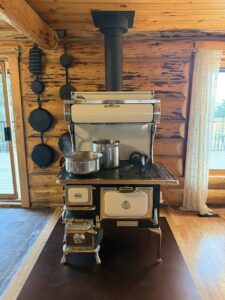
The Hardest Thing to Leave: Martha

Martha is my wood cook stove. She is also the only inanimate object I have ever given a name to.

She is not coming with us. Too heavy, too permanently installed, too difficult to move. But a wood cook stove is a non-negotiable in my kitchen. I have had one for nearly 20 years. A new stove is coming. This time, hopefully with a glass door so I can watch the fire.

What Martha taught me about cooking, about patience, about doing things the slower way, that comes with me regardless.
Printable Checklist: Deciding What to Keep When Moving a Homestead

  • Build the infrastructure on the new property before committing to bringing livestock
  • Identify which animals are truly essential vs. kept out of habit
  • Prioritise sentimental or hard-to-replace plants over easily purchased varieties
  • Evaluate equipment based on the scale of the new property, not the old one
  • Give yourself permission to observe the new land before making permanent planting decisions
  • Start potting sentimental plants (comfrey, rhubarb, herbs) early so they travel well
  • Have a transition plan for animals you love but cannot yet house properly
 
The process of letting go has been more freeing than we expected. Moving into the next chapter with less, and with more intention, feels exactly right.
 
If you are navigating a homestead transition, I would love to have you inside the Little Mountain Ranch Community. Join us here.

Leave a Comment