

Table of Contents
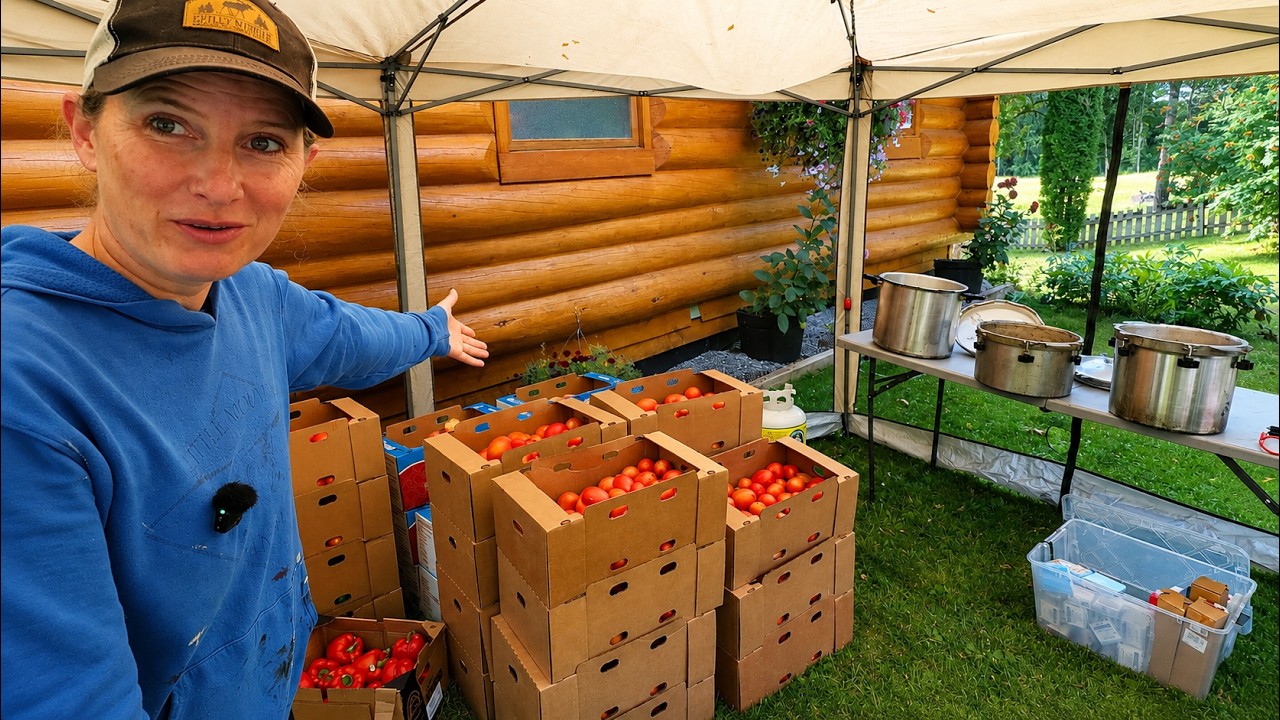
Most people think the hard part of a big canning day is the canning itself. After years of doing this on a large scale, including this past week when I set up an outdoor station to can 700 pounds of tomatoes and peaches, I can tell you it is actually the setup that determines how the whole day goes.
When your space is right, your tools are in order, and your prep work is done the day before, the actual canning becomes the easy part. When it is not, you spend the day improvising, backtracking, and ending up sore in places you did not expect.
I have been canning outside for a few years now. What started as a way to keep the kitchen clean during big preservation days has turned into my preferred method during late summer. Here is what I have learned.
Why I Can Outside (and Why You Might Too)
When you are processing 200 pounds of peaches or 500 pounds of tomatoes, your kitchen pays a significant price. There is steam, there is splatter, there is produce at every stage of processing on every surface. When we are not in the middle of moving, I can manage that. Right now, with boxes being packed and the house needing to stay functional, canning outside was the only sensible option.
But even in a normal year, I find outdoor canning easier for big days. The mess stays contained, there is more room to set up a proper workflow, and the fresh air makes a hot canning day much more comfortable. If you have the space and the equipment, I think it is worth trying at least once.
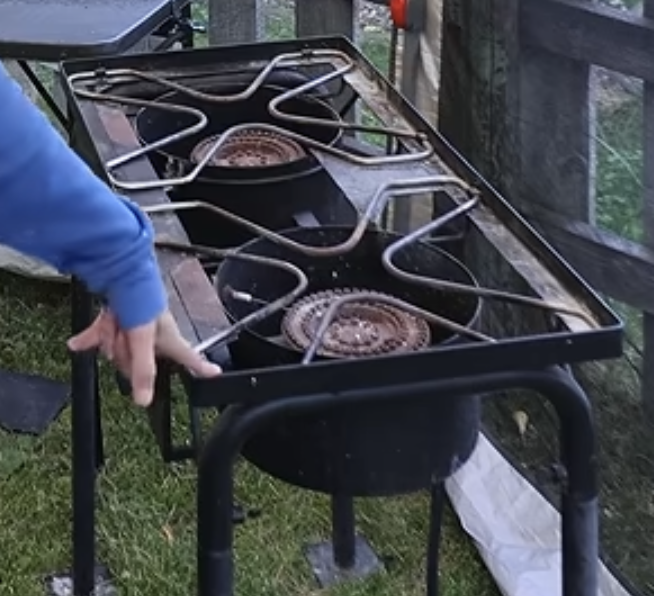
Use A Burner That Can Actually Handle The Load
This is the single biggest thing Dan and I wish we had done differently. We brought animals onto this property before we had proper fencing infrastructure in place, and it cost us enormous amounts of time, money, and stress over the years.
Good fencing is not optional. It is not something you do after the animals arrive. It is the first project, before anything else.
At the new property, we are not bringing chickens until there is a proper coop. We are not expanding livestock until the right pens are in place. The new farm actually has wonderful fencing for sheep and small livestock already, which is part of why we chose it. Our sheep and dairy cow are coming with us. The chickens are not, yet.
Tip: Before you bring any animal onto a property, walk every inch of the relevant fencing and ask yourself honestly whether it would hold. If the answer is “mostly,” you are not ready.
Get Your Table Height Right (Your Back Will Thank You)
Most inexpensive folding tables sit quite low. If you are doing any kind of cutting, dicing, or even just loading jars at that height for several hours, you will feel it the next morning.
Before I start canning, I prop up my work table so it sits at roughly counter height. There are a few ways to do this: furniture risers, wooden blocks, or a table that already sits at the right height. It sounds like a minor adjustment, and it is a major one.
Your blanching station and your jar-filling area do not have to be at the same height as your prep surface, but your main work table should be somewhere you can stand comfortably without hunching. Get this right before the day starts.
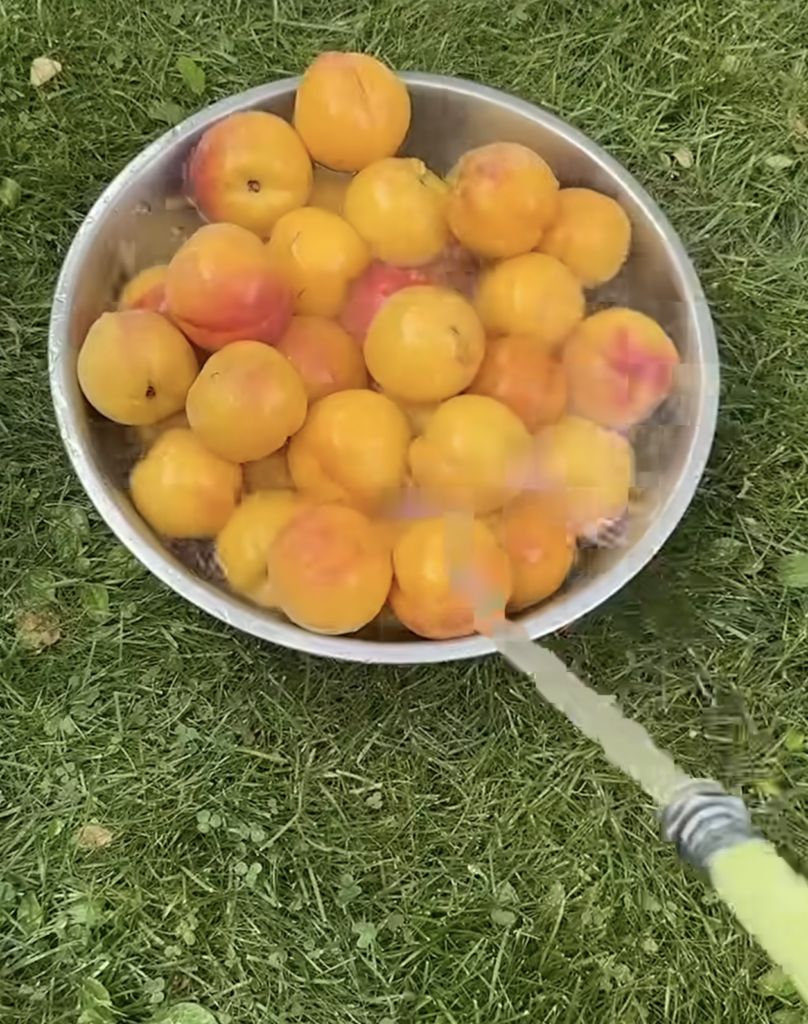
Run A Hose To Your Station
This was a game-changer I added a couple of years ago and I will never go back.
When you are working with multiple canners, a blanching setup, and produce that needs constant rinsing, hauling water back and forth from the house is exhausting and inefficient. Running a garden hose directly into your outdoor canning space means you can:
- Fill canners in place without carrying them
- Top off the water level as needed throughout the day
- Set up a cold water rinse station beside your blanching pot
- Rinse jars and surfaces without leaving your space
It is a simple thing, and it changes the entire rhythm of the day.
Wash Your Jars The Day Before
On canning day, you want to be doing one thing: canning. Every decision or task you can move to the day before is time and energy you get back when it matters.
I wash all my jars in the days leading up to a big canning day, then put them back in their boxes upside down so nothing can get into them. On the day itself, I just grab what I need from the box and go. No rinsing, no hunting for lids, no trying to dry jars between batches.
This also applies to your lids and rings. Have them counted, sorted, and in a spot where you can reach them easily. The more friction you remove from the process in advance, the smoother the day goes.
Use Netting If Wasps Are An Issue
This one is specific to late summer canning, and this year it has been more relevant than ever. The wasps have been unusually bad, and trying to can outside without some kind of barrier would have made the whole thing miserable.
I set up a pop-up tent with bug netting over my entire canning station. It keeps the wasps out without blocking the airflow, and it also gives you a bit of shade on a warm day.
One important lesson from last year: make sure your burners are spaced away from the netting. If they are too close, the heat will melt holes in it. Yes, I learned this the hard way. Space them at least a few feet from the nearest panel and check that nothing is sitting too close.
Printable Checklist:
Before your next big canning day, work through this list:
- Sturdy, stable propane burner (Coleman or equivalent)
- Extra propane tank
- Work table at counter height (prop it up if needed)
- Garden hose running into your station
- Cold water basin for blanching/cooling
- Jars washed and stored in boxes, upside down
- Lids and rings sorted and accessible
- Old bath towels on the jar table to cushion and absorb water
- Pop-up tent with bug netting if needed in late summer
- Burners positioned away from netting
Want more practical homesteading skills for every season? Come join us in the Little Mountain Ranch Community, where we share exclusive videos, resources, monthly challenges, and a space full of people who love this kind of work as much as you do.