

Table of Contents
Transitioning plants from a cozy indoor grow room to the harsh outdoor elements requires careful planning. Indoors, seedlings are protected from wind, heavy rains, and intense UV rays. If you move them outside too quickly, the shock can easily kill them.
Over the years of growing food in our short Northern season, I have developed a few systems to protect sensitive plants and streamline the spring planting process. In this guide, we will cover exactly how to avoid transplant shock and a highly effective method to harden off seedlings without the daily hassle.
Join me out by the greenhouse as we get our tender seedlings ready for the outdoor garden.
The Danger of Transplant Shock
Certain plants handle root disturbance beautifully, while others absolutely despise it. When a sensitive plant is moved from a small container into the garden, it can experience transplant shock.
When this happens, the plant will essentially limp out. The leaves may droop, and the growth will stall completely for the first couple of weeks while it tries to recover. While shock is rarely fatal on its own, losing weeks of active growth is detrimental in a short growing season.
Timing Rules for Starting Squash Seeds
Squash plants—including pumpkins, zucchini, and winter squash—are notoriously prone to severe transplant shock. Their vines are fragile, and their root systems do not tolerate disruption well.
To avoid this, I adhere to a strict timeline: never start squash seeds more than four weeks before you intend to put them in the ground.
If you start them too early, the roots become tightly bound inside their container. The more rootbound a plant is, the more likely you are to tear those roots during planting, triggering shock. By planting them just four weeks prior to your outdoor planting date, the plants remain small, healthy, and incredibly easy to handle.
Planting Tip: When sowing squash seeds in your nursery pots, simply press the seed into the soil at a depth equal to the size of the seed itself, cover lightly, and water well.
A Hands-Free Hardening Off System
To solve the shuffling problem, I created a permanent hardening-off space on the south side of my nursery greenhouse using a simple 30% shade cloth.
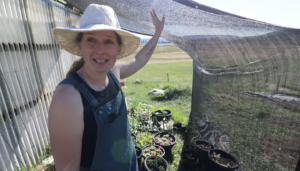
The Setup:
- Drive two T-posts into the ground parallel to the greenhouse wall.
- Attach the shade cloth to the edge of the greenhouse roof and stretch it out to the T-posts, creating a shaded canopy.
Why This Works: Because of how this structure is positioned, I do not have to move the plants at all. As the sun rises in the east, it hits the plants directly for a few hours of gentle morning light. When the sun reaches its peak midday intensity, the shade cloth completely protects the seedlings. As the sun sets in the west, they receive another dose of gentle, late-afternoon light.
This setup provides the exact staggered light exposure required to properly harden off tender plants, completely eliminating the daily chore of moving heavy trays.
Prepping Garden Beds for Planting
Once your plants are hardened off, they are ready for the dirt. However, before a single seedling goes into the ground, I use a specific watering cycle to manage weeds.
After top-dressing the garden beds with roughly six inches of fresh, aged compost, I set up a sprinkler and give the bare soil a deep soak. I wait a day, water it deeply again, and wait one more day.
This moisture rapidly germinates the weed seeds resting near the surface. I then walk through the beds with a stirrup hoe, pulling up all the tiny weeds in one pass. This leaves a clean, well-moistened bed perfectly prepped for your healthy seedlings.
Printable Checklist: Transplanting Success
- Start squash seeds a maximum of four weeks before outdoor planting.
- Plant squash seeds at a depth equal to the size of the seed.
- Acclimate indoor seedlings to UV rays gradually to prevent sunscald.
- Utilize a 30% shade cloth to filter harsh midday sun during the hardening-off period.
- Water bare, composted beds repeatedly to sprout and remove early weeds before planting.
If you are navigating the busy spring planting season and looking for support, you do not have to figure it out alone. I invite you to join us inside the Little Mountain Ranch Community, where we share reliable growing methods, troubleshoot our gardens, and learn alongside capable people.