

In This Post
After a long winter, there is nothing better than getting back out into the dirt to plan the upcoming season. While I sometimes fly by the seat of my pants when it comes to gardening, my vegetable garden layout decisions are heavily informed by years of trial and error in our Zone 3b climate.
In this guide, we will cover the practical strategies I use to structure my main crop garden. We will discuss exactly where to place specific plants, how to manage pests and slopes, and why you might want to stop growing certain vegetables altogether.
Join me in the crop garden as we plan out this season’s vegetable and flower placement.
Rethinking Crop Rotation for Potatoes
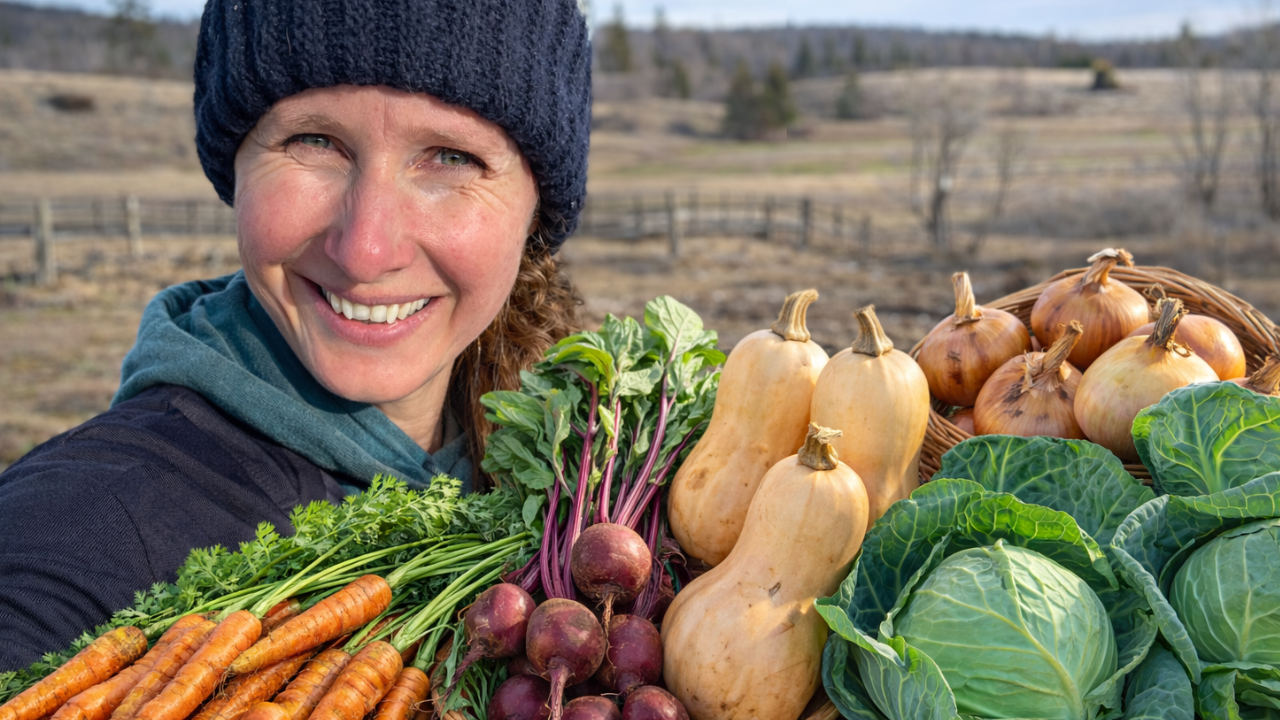
In my main crop garden, I focus on bulk vegetables that store well in a root cellar or pantry, such as potatoes, carrots, onions, and squash.
Conventional gardening wisdom dictates that you should not plant potatoes in the same location year after year. The concern is that soil-borne diseases, like scab, can harbor in the dirt for up to five years. However, I have grown potatoes in the exact same patch for over five years. Through experience, I discovered that uneven moisture and drought conditions actually trigger scab far more than crop location. By keeping the soil moisture highly consistent throughout the entire growing season via drip irrigation, I have very low incidences of scab.
Strategic Flower Placement
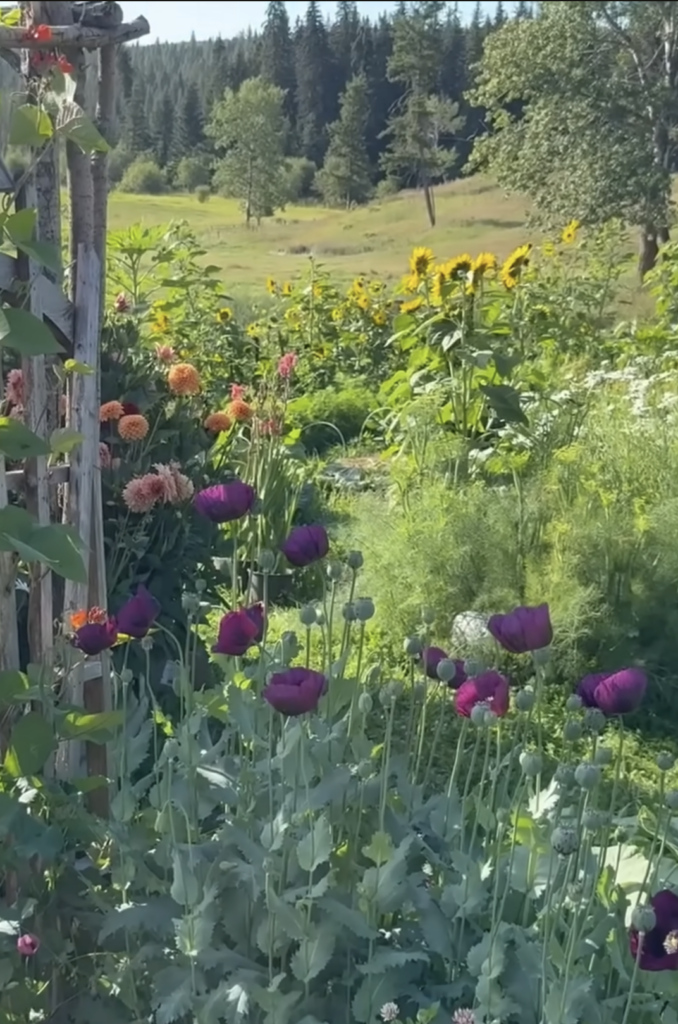
I am a strong advocate for planting flowers directly inside the vegetable garden. They attract necessary pollinators and add a beautiful, whimsical feel to the space. However, you must be strategic about their placement so they do not shade out your food crops.
- Plant Tall Flowers on the North Side: I always plant towering flowers, like sunflowers, along the North edge of the garden. This prevents them from casting a shadow over neighboring vegetables as the sun moves from East to West.
- Keep South-Facing Edges Low: On the South side of the garden, I plant short, bushy varieties like heritage marigolds. This offers a bright welcome without blocking the sun.
- Layer Heights in the Beds: When planting low-lying vines, like pickling cucumbers, I alternate the planting holes with tall zinnias. The zinnias grow up above the cucumber foliage, creating a beautiful tiered effect without shading the vines below.
Managing Pests and Slopes
A practical vegetable garden layout must account for the physical environment and local pest pressure.
If your garden rests on a slope, run your pathways strategically so that heavy rains have a clear place to drain. If the beds block the flow of water, a sudden downpour will pool in the pathways and completely wash out the soil in your lower beds.
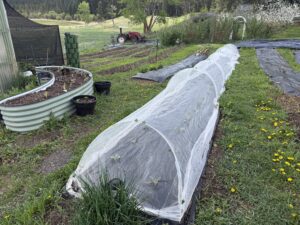
When it comes to pests, cabbage moths will quickly decimate a crop of broccoli, cauliflower, or cabbage. I highly recommend covering these plants with bug netting the moment they go into the ground. To make managing the row covers easier, I group all of my brassicas together in one specific section of the garden.
Feeding Heavy Growers
I utilize high-quality weed barrier for sprawling, heat-loving crops like winter squash and zucchini. The black material warms the soil and drastically reduces weeding. Since squash plants are notoriously heavy feeders, it is critical to add fresh, aged compost into every single planting hole each season to ensure they have the nutrients required to produce a heavy yield.
Growing What Works (And What to Skip)
If you are new to gardening, the fastest way to fail is to overdo it. Start small and only grow the food your family actually eats. Pay close attention to your grocery habits before ordering seeds.
Over the years, I have stopped growing several popular crops because the effort or space required did not justify the yield:
- Corn: In a short, cool climate, corn is unreliable. I prefer to buy organic frozen corn in bulk instead.
- Peas: The amount of physical space and the labor required to shell enough peas to feed a large family through the winter simply is not worth the return for us.
- Artichokes: While delicious, they act as an absolute magnet for aphids in my garden.
- Large Melons: Watermelons take up valuable high tunnel real estate. Instead, I focus on compact, prolific Northern melons that thrive in our specific climate.
Printable Checklist: Garden Layout Planning
- Maintain consistent soil moisture to prevent potato scab.
- Place tall flowers (sunflowers) on the North edge to prevent shading.
- Plant short flowers (marigolds) on the South edge.
- Interplant tall flowers (zinnias) with low-growing vines (cucumbers).
- Group brassicas together for easy management of bug netting.
- Run pathways in alignment with the natural slope to prevent washouts.
- Add fresh compost to planting holes for heavy feeders like squash.
If you are ready to learn more about growing your own food, preserving the harvest, and cooking from scratch, come join the Little Mountain Ranch Community. We have an active forum where we share practical advice and troubleshoot our gardens together.