


In This Post
In this guide, we are going to walk through how to easily build a three-month pantry.
With food prices continuing to climb, it is becoming more difficult for many families to make ends meet. Establishing a working pantry is one of the best ways to insulate your grocery budget. The pantry we are outlining today will not cover every single fresh meal or snack, but it will secure the foundational calories, proteins, and fats required for a family of four.
(Note: The prices listed below are approximate, based on basic grocery store prices at major retailers in Canadian dollars. If you have a larger or smaller household, simply multiply or divide these baseline numbers).
You can follow along with me down in the root cellar and the pantry to see exactly how we store these staples in the video below.
Core Calorie Staples
When building a pantry, you must start with dense, affordable calories that provide energy and keep you full.
Root Vegetables
- Potatoes (100 lbs): A staple that is incredibly affordable. You can easily store 100 lbs in a cool, dark place (do not store potatoes in the fridge).
- Carrots, Beets, and Turnips (20-30 lbs): These also require a cool, dark environment. Light exposure will cause root vegetables to sprout. Unlike potatoes, these can be stored in your refrigerator’s crisper drawer if you lack a root cellar.
Bulk Grains
- Rice (20-25 lbs): Rice pairs with nearly everything. For long-term storage, stick to white rice. Brown rice contains oils that will go rancid after about six months, whereas white rice can store for a year or more.
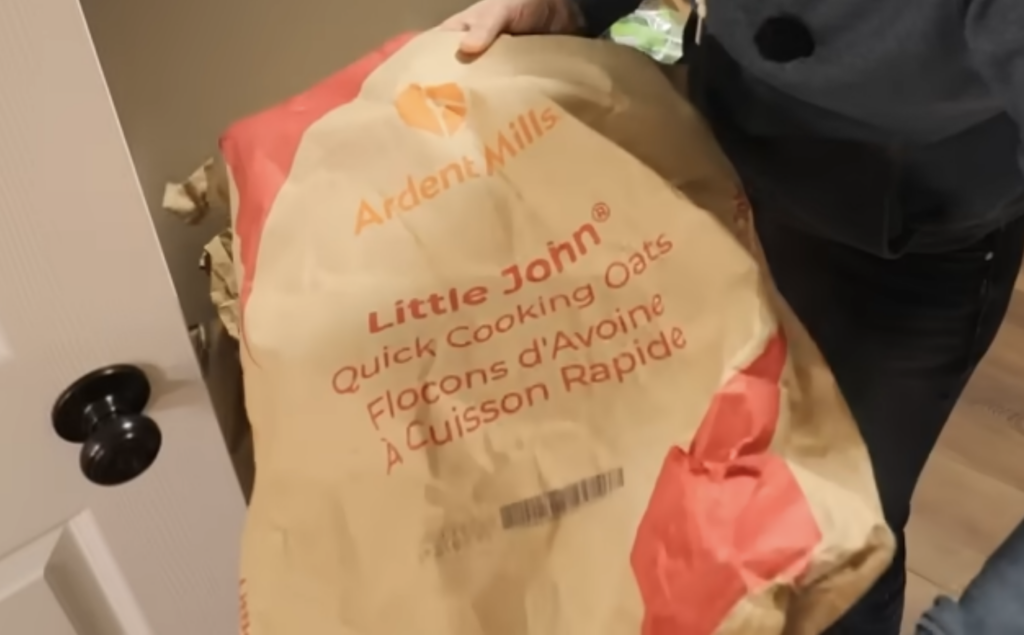
- Oats (25-30 lbs): Oats are versatile. Beyond oatmeal, they can be used to stretch ground meat in meatballs and meatloaf.
- A Storage Tip for Grains: To prevent pests, place bags of flour and oats into your deep freezer for a couple of days before moving them to your pantry shelves. This eliminates any microscopic eggs that may have traveled from the processing facility.

Shelf-Stable Proteins
Proteins are often the most expensive part of a grocery budget, but bulk buying makes them highly affordable.
- Dry Beans (25-30 lbs): Beans are arguably the most cost-effective protein available. You do not need fancy mylar bags or oxygen absorbers to store them for a few months; simply keeping them in an airtight jar or their original bags in a dry cupboard is sufficient.
- Eggs (Varies): While not a traditional dry good, eggs are a crucial pantry extension. If you purchase unwashed, farm-fresh eggs, the natural “bloom” remains intact, allowing them to be stored safely on the kitchen counter for up to 30 days without refrigeration.
Long-Keeping Vegetables
You do not need an underground root cellar to store hardy vegetables through the winter. A room-temperature space that remains dry will work perfectly.

- Winter Squash: Varieties like spaghetti squash, kabocha, and butternut store incredibly well. Simply keep an eye on them starting in late winter to catch any soft spots early.
- Onions: Varieties like Redwing and Patterson are excellent storage onions. Kept in a dry room, they will easily last through the winter months. A three-month supply of onions and garlic will cost roughly $20 to $30.
Essential Fats
Fats are critical for brain health, satiety, and cooking from scratch. A family of four will go through roughly 10 to 12 lbs of fats over three months.
- Options to stock: Olive oil, coconut oil, butter (stored in the freezer), and lard.
- Cost-saving tip: If spending $45 to $65 on bulk oils is outside your budget, consider asking your local butcher for beef or pork fat trimmings. Rendering your own tallow or lard at home is incredibly inexpensive and provides a high-quality cooking fat.
Flavor Builders & Baking Basics
These are the ingredients that turn basic calories and proteins into actual meals.
- Flour (20 lbs): Store in an airtight container in a cool place. White flour stores longer than whole wheat.
- Pasta (15-20 lbs): A quick, affordable base for busy nights.
- Canned Tomatoes & Paste (12-18 cans): Essential for soups, stews, and pasta dishes.
- Sweeteners (10-15 lbs Sugar, 5-7 lbs Honey): Keeping both on hand provides diversity for baking and cooking.
- Vinegar (1 Gallon): The foundation for homemade salad dressings and marinades.
- Salt (5-7 lbs): The most critical flavor enhancer.
- Leavening Agents: One container each of baking soda and baking powder.
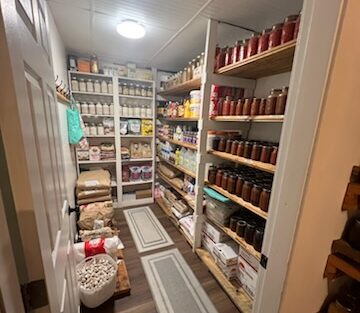
In total, purchasing these foundational basics at a standard grocery store will cost roughly $450 CAD. While you will still need to supplement with fresh produce and meat, securing this three-month base ensures your family is fed, your budget is protected, and your daily cooking routine is significantly easier.
Printable Checklist: 3-Month Pantry Base (Family of 4)
- Grains: 20-25 lbs White Rice, 25-30 lbs Oats, 20 lbs Flour, 15-20 lbs Pasta.
- Proteins: 25-30 lbs Dry Beans.
- Vegetables: 100 lbs Potatoes, 20-30 lbs Carrots/Beets/Turnips, Winter Squash, Storage Onions & Garlic.
- Fats: 10-12 lbs total (Olive Oil, Coconut Oil, Butter, Lard).
- Flavorings: 12-18 cans Tomatoes, 5-7 lbs Salt, 1 Gallon Vinegar, Baking Soda/Powder.
- Sweeteners: 10-15 lbs Sugar, 5-7 lbs Honey.
I hope this gives you a practical starting point for building your own food security at home.
Building a working pantry from scratch can feel like a daunting task when you are first starting out. If you are looking for a clear, consistent learning space to master these timeless skills, I invite you to join us inside the Little Mountain Ranch Community.
Whether you need help troubleshooting a from-scratch recipe, figuring out how to properly store your bulk dry goods, or simply want to connect with a grounded group of like-minded individuals, our community is designed to support you. We host regular class-style teaching calls, open Q&A office hours, and provide access to a comprehensive resource library.